
The McMahon–Hussein Correspondence was a series of letters exchanged in 1915–1916 between British official Sir Henry McMahon and Sharif Hussein of Mecca. In the letters, Britain promised to support Arab independence after World War I if the Arabs revolted against the Ottoman Empire. The terms were vague and later conflicted with other agreements like Sykes-Picot and the Balfour Declaration. This led to lasting Arab distrust of British intentions.
The Balfour Declaration was a statement issued by the British government in 1917, expressing support for the creation of a “national home for the Jewish people” in Palestine. It was addressed to a leader of the British Jewish community during World War I. The declaration ignored the political rights of the Arab population in the region and later became a key source of tension in the Israeli-Palestinian conflict.
The Sykes-Picot Agreement was a secret deal made in 1916 between Britain and France to divide the Ottoman Empire’s Arab lands after World War I. It gave France control over Syria and Lebanon, and Britain control over Iraq, Jordan, and Palestine. The agreement ignored Arab hopes for independence and shaped much of the modern Middle East.
After World War I, the League of Nations created the mandate system to manage former Ottoman and German territories. Britain and France were given control over regions like Palestine, Iraq, and Syria, with the stated goal of preparing them for independence. In reality, these mandates extended colonial influence and ignored the wishes of local populations.
The system shaped borders and politics in the Middle East, fueling future conflicts. Though it ended after World War II, the impact of mandates is still felt today, especially in areas where foreign control delayed self-determination.
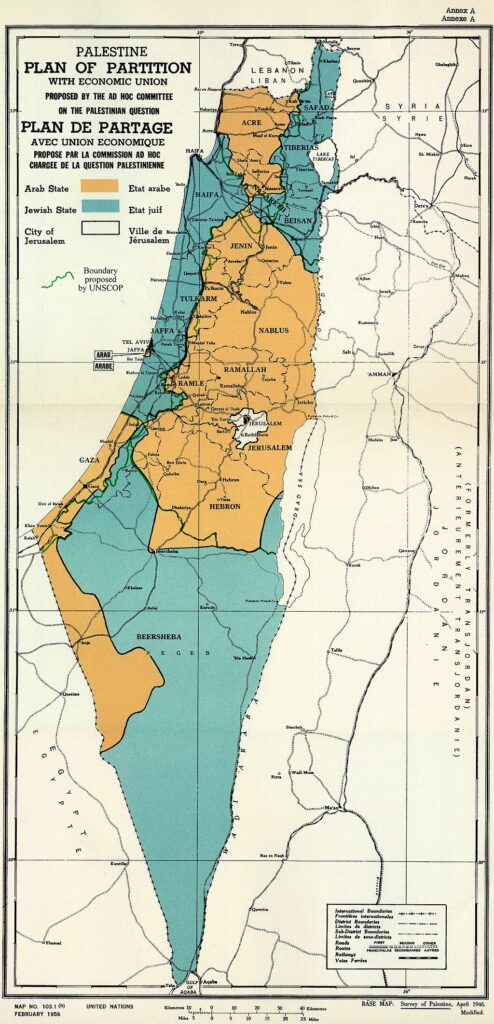
The UN Partition Resolution, officially Resolution 181, was passed by the United Nations General Assembly on November 29, 1947. It proposed dividing British-ruled Palestine into two independent states—one Jewish and one Arab—with Jerusalem placed under international administration. The Jewish leadership accepted the plan, but the Arab leadership rejected it, arguing it was unfair and violated the rights of the Arab majority.
The resolution’s adoption led to rising tensions and violence, eventually resulting in the 1948 Arab-Israeli War. Though never fully implemented, the resolution remains a key moment in the history of the Israeli-Palestinian conflict.
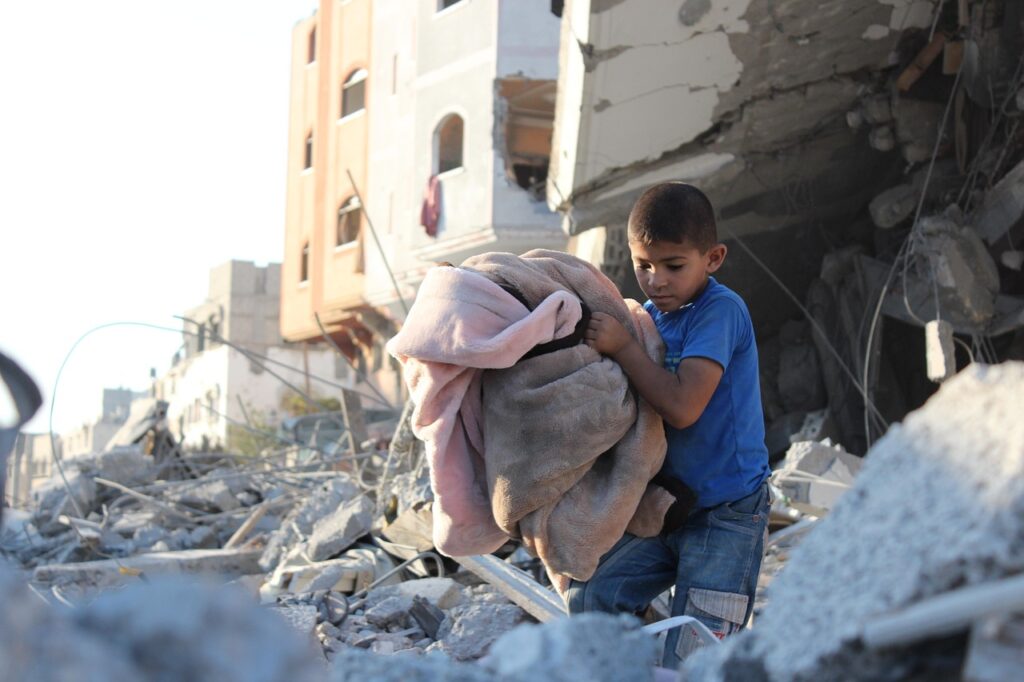
The occupation status refers to Israel’s continued military and administrative control over the West Bank, East Jerusalem, and, to a debated extent, Gaza, since the 1967 Six-Day War. Under international law, particularly the Fourth Geneva Convention, these areas are considered occupied territories, and Israel is seen as an occupying power. This status has been reaffirmed by numerous United Nations resolutions and legal bodies, including the International Court of Justice.
In the West Bank and East Jerusalem, Israel maintains a significant presence through military checkpoints, settlements, and legal authority over much of the territory. Although Israel withdrew its troops and settlers from Gaza in 2005, it still controls the borders, airspace, and access to resources, leading many international bodies to argue that Gaza remains under occupation in practice. The occupation has wide-ranging impacts on Palestinian daily life, freedom of movement, access to land, and political sovereignty, and it remains one of the central issues in the Israeli-Palestinian conflict.
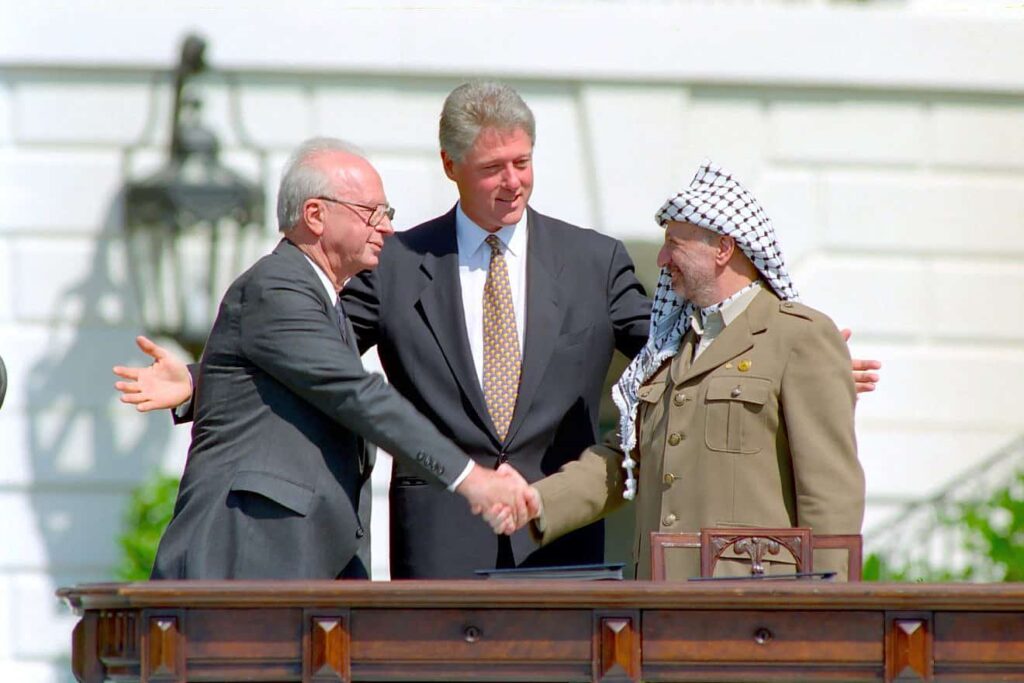
The Oslo Accords, signed in the 1990s, were a set of agreements between Israel and the Palestine Liberation Organization (PLO) aimed at establishing a framework for peace and Palestinian self-governance. Oslo I (1993) and Oslo II (1995) created the Palestinian Authority, divided the West Bank into Areas A, B, and C, and laid out a five-year plan for final-status negotiations. However, those final negotiations never took place.
Today, the Oslo Accords are widely seen as frozen or eroded, with many of their goals unfulfilled. Political trust has broken down, Israeli settlement expansion has continued, and the division of the West Bank has become more entrenched. While the Palestinian Authority still exists and coordinates with Israel on some matters, the original vision of Oslo—for a negotiated two-state solution—remains stalled, and the framework no longer serves as a basis for meaningful progress.
„The denial of the Palestinian people’s right to build their own state is unacceptable and will only prolong the conflict and threaten global peace.“
(Source: Times of Israel, 2025)
„The ongoing violence is a war of extermination, and the establishment of a Palestinian state is necessary for peace and stability in the Middle East.“
(Source: Anadolu Agency, 2025)
Statehood refers to the status of being a recognized independent nation with sovereignty over a defined territory and population. In international law, the most widely accepted criteria for statehood are outlined in the 1933 Montevideo Convention. According to this convention, a state must possess:
A permanent population
A defined territory
A government capable of effective control
The capacity to enter into relations with other states
These criteria provide a legal framework for assessing claims to statehood, but the reality is often more complex. Political recognition by other states and international organizations is equally crucial, as it grants legitimacy and access to diplomatic, economic, and security benefits.
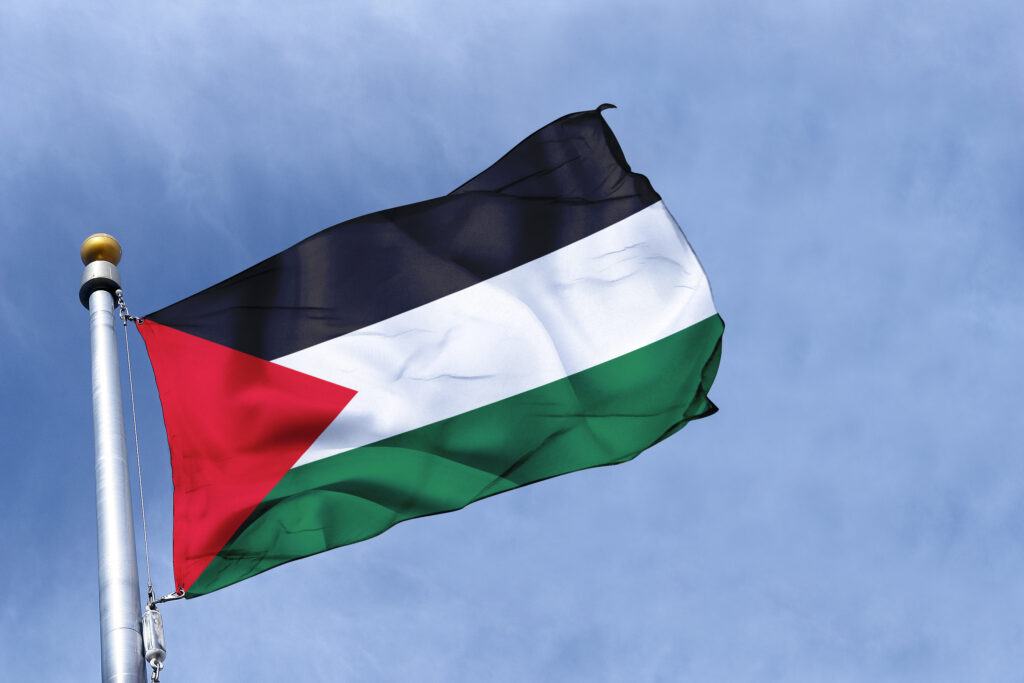
While meeting Montevideo’s criteria is essential, recognition by existing states plays a decisive role in a polity’s ability to function as a state within the international system. Recognition can be unilateral or collective (e.g., through the United Nations). It affirms the entity’s sovereignty and helps it participate in international affairs, treaties, and organizations.
However, recognition is a political act and is often influenced by geopolitical interests, alliances, and conflicts. For example, Taiwan meets the Montevideo criteria but is only recognized by a few countries due to Chinese opposition. Conversely, some entities gain broad recognition despite disputed borders or governance challenges.
Statehood entails sovereignty—the supreme authority within a territory, free from external interference. Sovereignty enables states to create laws, enforce them, and govern their populations independently. It also implies responsibilities, including protecting citizens‘ rights and engaging responsibly in the international community.
In contested regions, sovereignty becomes a contentious issue. Competing claims, military occupation, or external control challenge the full exercise of sovereignty and statehood. Such complexities often lead to prolonged disputes and conflicts.
The Palestinian pursuit of statehood exemplifies the challenges of translating legal criteria into political reality. Palestinians have a defined population, territorial claims in the West Bank, Gaza, and East Jerusalem, and a governing authority in the Palestinian Authority. Yet, their sovereignty is severely limited by Israeli occupation, lack of control over borders, and restricted movement.
Palestine’s status at the United Nations is that of a non-member observer state, recognized by over 130 countries but not universally accepted. This partial recognition grants Palestine some diplomatic privileges but stops short of full UN membership and the full rights of sovereign statehood.
The debate over Palestinian statehood is entangled with broader issues such as borders, security, refugees, settlements, and the status of Jerusalem. These issues remain core obstacles to a two-state solution and peace negotiations. Without agreed borders and political consensus, full Palestinian sovereignty remains elusive.
Recognition of statehood has profound implications:
International Legitimacy: It enables access to international forums such as the UN General Assembly, the International Criminal Court, and regional organizations.
Diplomatic Relations: Recognized states can establish formal diplomatic ties and treaties.
Economic Benefits: Recognition can unlock international aid, trade agreements, and investment opportunities.
Legal Protections: Recognized states have the right to defend their territorial integrity and seek redress in international law.
For Palestinians, recognition would strengthen their political standing and could reshape negotiations with Israel. Conversely, lack of recognition leaves them vulnerable to continued occupation and limited political agency.
Statehood is a multifaceted concept blending legal definitions, political recognition, and practical sovereignty. It is both a legal status and a powerful symbol of self-determination and national identity. The pursuit of statehood, as seen in the Palestinian case, often faces barriers beyond legal qualifications—rooted in geopolitical realities and unresolved conflicts.
Understanding statehood requires appreciating this complexity and recognizing that achieving it is rarely a straightforward process. It involves law, politics, diplomacy, and often decades of struggle.