
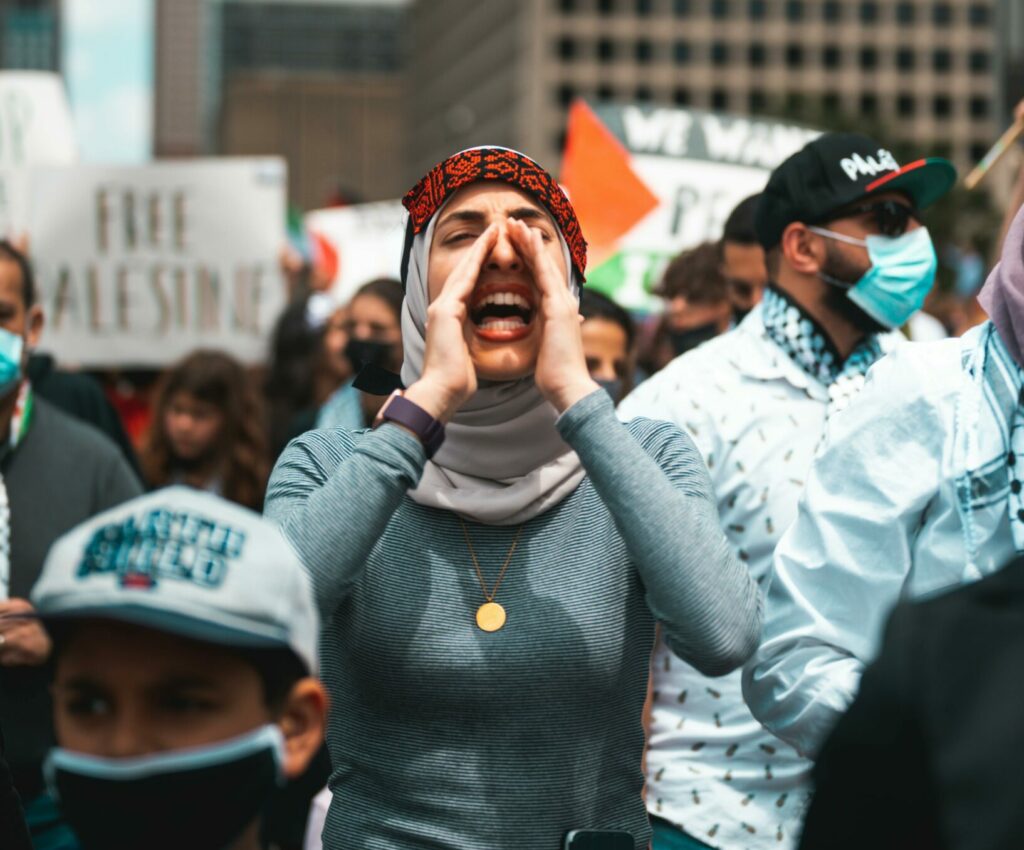
Under international law, particularly the Fourth Geneva Convention, an occupation exists when a foreign power exercises effective control over a territory without sovereign title. Although Israeli soldiers are not stationed permanently within Gaza, Israel retains decisive authority over Gaza’s airspace, territorial waters, population registry, and most of its borders. It controls the entry and exit of goods and people through all but one of Gaza’s crossings — the Rafah crossing with Egypt — which itself operates under stringent coordination and political constraints.
Furthermore, Israel controls access to essential infrastructure, including the flow of electricity, fuel, and telecommunications. Restrictions on imports, particularly materials deemed to have dual-use potential, have severely undermined Gaza’s ability to rebuild from successive conflicts and have stifled its economic development. This level of control, many legal experts argue, fulfills the criteria of effective occupation.
The implications of this continued occupation are profound. Over two million Palestinians live in Gaza, more than half of whom are children. The United Nations has repeatedly warned that the enclave is becoming uninhabitable due to deteriorating infrastructure, severe restrictions on movement, and repeated military escalations. Unemployment rates are among the highest in the world, and access to clean water, medical care, and basic services remains critically limited.
The blockade, imposed jointly by Israel and Egypt since 2007 following the takeover of Gaza by Hamas, has compounded the crisis. While Israel cites security concerns — including the launching of rockets and the threat of weapons smuggling — human rights organizations and UN agencies argue that the blockade constitutes collective punishment, prohibited under international humanitarian law.
The issue of Palestinian displacement is one of the longest-standing and most complex humanitarian and political crises in modern history. At the heart of the matter lies a deep tension between competing concepts: displacement versus resettlement, and symbolic return versus pragmatic compromise. These tensions directly influence the viability of broader political solutions, particularly the proposed two-state solution.
The displacement of Palestinians began during the 1947–1949 Arab-Israeli War, which led to the flight or expulsion of approximately 750,000 Palestinians from what became the State of Israel. A second wave of displacement occurred in 1967, when Israel occupied the West Bank, Gaza Strip, and East Jerusalem. Today, over 5.9 million Palestinian refugees and their descendants are registered with UNRWA (United Nations Relief and Works Agency), most of whom remain stateless and in protracted exile in the West Bank, Gaza, Lebanon, Syria, and Jordan.
This enduring displacement is not only a humanitarian crisis but a core political grievance that continues to shape Palestinian identity and resistance.
VS.
Resettlement refers to the integration of refugees into host countries or third countries rather than allowing them to return to their original homes. This has been proposed in various peace plans as a pragmatic solution — one that avoids direct confrontation with Israel’s demographic and security concerns.
However, for many Palestinians, resettlement is viewed not as a solution, but as a continuation of dispossession — a non-solution that abandons the right of return, which is enshrined in UN General Assembly Resolution 194 and upheld by international law. While some host countries, like Jordan, have granted citizenship to Palestinians, others (notably Lebanon) impose strict limitations on their rights to work, own property, and participate in political life. These conditions reinforce refugee status rather than resolve it.
Moreover, resettlement often lacks political will from both host countries and international donors, and it fails to address the historical grievances tied to forced displacement. It is seen by many Palestinian communities as a move toward permanent exile — erasing their identity and claim to homeland.

In the context of the Israeli-Palestinian conflict, the term mandate refers not to the historical League of Nations system but to the political authority, legitimacy, and representative will granted to leadership or institutions to negotiate, implement, or enforce a solution. This is especially important in relation to the two-state solution. Mandates are central to understanding both the failures and the possible pathways toward peace.
Historically, several attempts at peace such as the Oslo Accords, the Camp David Summit, and the Annapolis Conference failed partly because the negotiating parties either lacked full support from their constituencies or lost it during or after negotiations. In polarized societies, compromise can be seen as betrayal, and leaders may lose power if they pursue peace without public backing.
A mandate, in political terms, is the recognized authority of a party or government to act on behalf of its people, especially in high-stakes negotiations. For any two-state solution to be viable, both Israeli and Palestinian leadership must have clear mandates. These mandates must involve legal authority, public support, political coherence, and institutional legitimacy.
Fragmented Palestinian Mandate
One of the most critical challenges to a two-state solution is the fragmentation of the Palestinian political mandate.
The Palestinian Authority, based in the West Bank, is internationally recognized as the official representative of the Palestinian people. However, it has been weakened by years of political stagnation, absence of elections, and declining public trust.
Hamas, which controls Gaza, holds considerable domestic support in parts of the Palestinian population. Yet it is labeled a terrorist organization by Israel, the United States, and the European Union, which limits its participation in formal diplomacy.
The lack of unified elections since 2006 has undermined the legitimacy of all Palestinian political institutions. This has left no clear and universally accepted representative to engage in final-status negotiations on behalf of all Palestinians, including those in the diaspora.
The two-state solution is a proposed framework for resolving the Israeli-Palestinian conflict by establishing an independent State of Palestine alongside the State of Israel. It envisions peaceful coexistence based on mutual recognition, security, and defined borders. This solution has been widely endorsed by the United Nations, the European Union, and many Arab states. However, despite decades of negotiations, it has yet to be implemented.
The origins of the two-state idea date back to the 1947 UN Partition Plan, which proposed separate Jewish and Arab states. While the Jewish leadership accepted the plan, the Arab leadership rejected it, leading to war and the displacement of Palestinians. The idea re-emerged in the 1990s through the Oslo Accords, where both parties agreed to a framework for peace. Since then, the political and territorial landscape has become more complex.
Several key issues remain unresolved and continue to block progress toward a two-state solution. These include the status of Jerusalem, the fate of Palestinian refugees, the borders of a future Palestinian state, and the security of Israel. Both sides have conflicting claims, and efforts to compromise often break down under political and public pressure. Without addressing these core concerns, no sustainable solution can be achieved.
Israeli settlement expansion in the West Bank has significantly altered the map, making the creation of a contiguous Palestinian state increasingly difficult. Over 700,000 Israelis now live in areas beyond the 1967 borders, including East Jerusalem. Many Palestinians view the settlements as a form of annexation and a violation of international law. The physical fragmentation of Palestinian land challenges the very viability of a sovereign state.
The Palestinian political leadership is divided between the Palestinian Authority in the West Bank and Hamas in Gaza. This split undermines efforts to present a unified negotiating position and weakens the overall Palestinian mandate. On the Israeli side, political shifts toward the right have led to governments less inclined to support territorial concessions. The lack of stable leadership on both sides has stalled meaningful dialogue.
The international community has played an active role in supporting a two-state framework through diplomacy, aid, and peace initiatives. The United States, the European Union, and various Arab states have sponsored talks and proposed roadmaps. Despite these efforts, international pressure alone has failed to produce a final agreement. External actors often struggle to influence domestic political realities within Israel and Palestine.
The idea of a confederation involving Gaza is one of several proposals discussed in efforts to resolve the Israeli-Palestinian conflict. A confederation generally refers to a political arrangement where two or more entities remain autonomous but cooperate on shared governance such as security, infrastructure, and borders.
In this context, one model envisions a Palestinian confederation between the West Bank and Gaza. Each region would maintain internal autonomy but share a unified government and national institutions. This model aims to overcome the long-standing political division between Fatah in the West Bank and Hamas in Gaza, which has existed since 2007. Gaza would remain part of the Palestinian political framework while managing many of its own affairs independently.
Another version of the confederation idea includes both Israel and a future Palestinian state. In this model, Israel and Palestine would exist as separate sovereign states but share certain institutions and cooperate on key issues. Gaza would be included within the Palestinian state and connected to the West Bank through a secure and regulated corridor or transit system. Supporters argue this approach allows for national independence alongside cooperation in areas like economy, security, and resource management.
Critics argue that a confederation could fail to address core demands such as full sovereignty, refugee rights, or demilitarization. In Gaza, serious challenges remain, including damaged infrastructure, armed factions, and limited access to essential services. These issues would need to be addressed before any confederation model could be realistically implemented.
Still, some policymakers, scholars, and civil society actors see a confederation as a practical alternative to the two-state model or the current state of conflict and separation. For Gaza, it could offer a path to political reintegration, economic development, and long-term stability without complete isolation or unrealistic expectations of full statehood under current conditions.
The idea of a federal state has been proposed as an alternative to the traditional two-state or one-state solutions in the Israeli-Palestinian conflict. A federal model would establish a single country with shared sovereignty while allowing distinct regions or communities to govern themselves on local matters. It aims to preserve both Israeli and Palestinian identities within one political framework that guarantees equal rights for all citizens.
In this approach, the federal state could consist of autonomous regions, such as an Israeli region and a Palestinian region, each with its own local government. Jerusalem could become a shared capital, possibly administered as a federal district with joint governance. A central federal government would be responsible for national issues like foreign policy, defense, currency, and infrastructure. Each region would manage areas such as education, religion, culture, and internal security.
Supporters believe that a federal state could respect both peoples‘ histories, promote equality, and allow peaceful coexistence in a shared land. It may offer solutions for overlapping populations, integrated economies, and the need for mutual recognition. For Palestinians in Gaza and the West Bank, federalism could offer self-rule while remaining part of a larger political entity, potentially helping to overcome internal divisions.
Despite its promise, the federal model faces serious challenges. Political distrust, unequal power, and the memory of past violence make cooperation difficult. Legal, cultural, and security systems would require careful balancing, strong institutions, and long-term commitment. Some critics worry that a federal state could entrench divisions or fail to deliver real equality.
Still, the federal state idea remains part of the broader discussion about how to create a peaceful and just future. It appeals to those who believe that neither full separation nor forced unification can succeed, and who seek a shared political solution based on mutual respect and shared responsibility.