
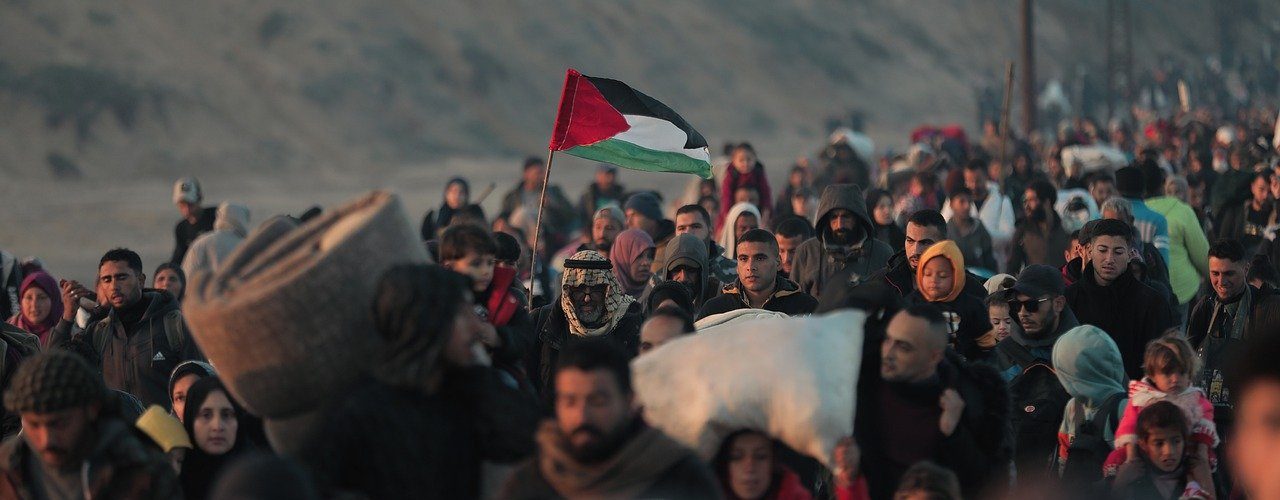
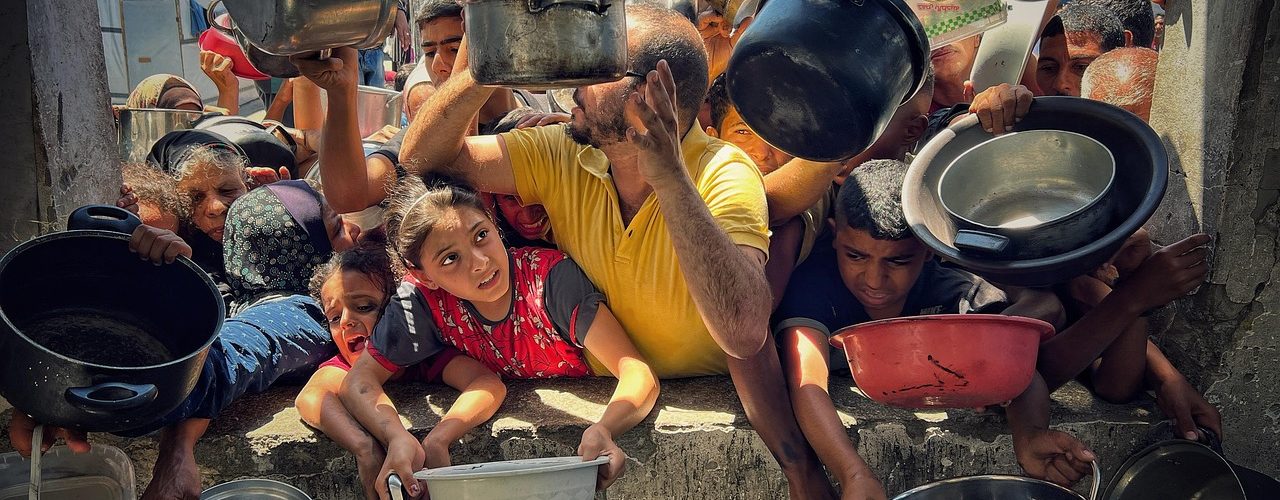
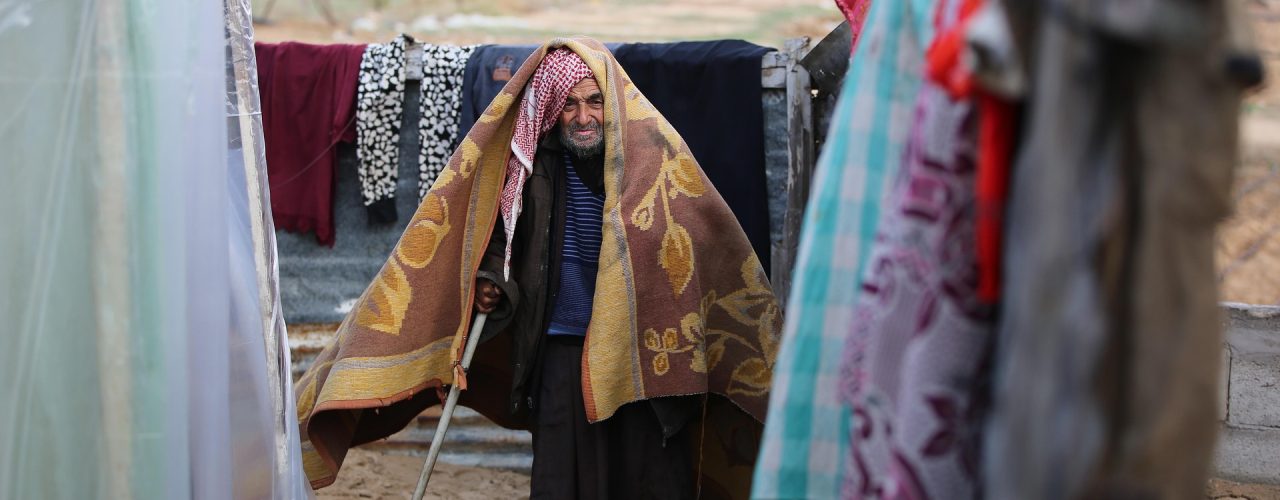
The definition of the term Palestinian refugees is complex and contested, varying significantly depending on institutional, historical, and political contexts. The following section provides an overview of the different approaches to defining this term based on the analysis by Roßkopf (2022: 192–196). It examines how key international actors and legal instruments such as the United Nations General Assembly (UNGA), the United Nations Conciliation Commission for Palestine (UNCCP), the United Nations Relief and Works Agency for Palestine Refugees in the Near East (UNRWA), and the United Nations High Commissioner for Refugees (UNHCR) have interpreted and applied the concept. Each body has developed its own criteria for determining refugee status, reflecting differing institutional mandates and evolving political realities. This overview highlights the resulting inconsistencies and their implications for legal protection and humanitarian assistance.
The United Nations Relief and Works Agency for Palestine Refugees in the Near East (UNRWA) counts about 5.9 million Palestinian refugees as eligible for its services, meaning that they are living in one of UNRWAS fields of operations, namely in the Westbank, including East Jerusalem, the Gaza Strip, Jordan, Lebanon, and Syria. More than 1.5 million of them are said to live in one of 58 recognized Palestinian refugee camps (UNRWA, 2025).
End of 2021, the total population of Palestinians was estimated to be about 14 million, with 5.3 million living in the occupied Palestinian territories (3.2 million in the West Bank and 2.1 million in the Gaza Strip), 1.7 million in Israel and nearly 7 million in exile (6.3 million in Arab countries and 750,000 in other countries
– Palestinian Central Bureau of Statistics: 2021. Approximately 700,000 were displaced during the Nakba of 1947-1949 and their descendants. About 1.33 million persons are estimated to have been displaced during the 1967 War and their descendants.
Another ca. 812.000 Palestinians count as internally displaced persons (IDP): About 439,171 Palestinians are estimated to have been internally displaced in Israel in 1948 and the following years and their descendants; another approximately 372,793 persons are meant to have been internally displaced within the occupied Palestinian territories since 1967 (BADIL Resource Center for Palestinian Residence and Refugee Rights, 2022: 40-41).
In 2023, the total number of refugees registered with UNRWA (n.d.) was 5,97 million distributed as such:
The Palestinian population in some other States has been sampled by BADIL Resource Center for Palestinian Residence and Refugee Rights (2022: 133-155; see for more country data also Albanese & Takkenberg, 2020: 269-322) as such (the years in brackets refer to the referenced latest statistics or references):
Germany: 250,000 or more (2018)
United States of America: 136,869 (2020)
Sweden: 70,000-80,000 (2021)
Canada: 44,820 (2016)
United Kingdom: 20,000-30,000 (2018)
Australia: 20,000-25,000 (2016)
France: 5,000 (2018)
Italy: 1,078 plus ‘recent’ protection seekers (2022)
New Zealand: 1,000 (2020)
Art. 1 A para. 1 of the Convention extends its refugee definition also to those having been considered a refugee under prior arrangements it expressly lists by their date. Up until then refugee protection in international law had always been designed ad hoc, as a response to a specific refugee crisis and devoted to the specifically affected group. This was even the very intention when the 1951 Refugee Convention was drafted. Art. 1 A para. 2 cl. 1 continuous extending the refugee definition to its actual focus group, namely those internationally displaced in the event of the second World War as well as in related displacements in the after-war period. And Art. 1 B further specifies the meaning of the phrase “occurring before 1 January 1951” as a possible limitation either in time or geographic scope or both. It was not before 1967 that the signatories to the New York Protocol relating to the Status of Refugees deleted these limitations in time and geography, making the 1951 Convention universally and durably applicable to any current or future refugee crisis.
The return of Palestinian refugees is one of the most deeply rooted and sensitive issues in the Israeli-Palestinian conflict. Since the 1948 Arab-Israeli War, an estimated 750,000 Palestinians were displaced or fled their homes, many never allowed to return. Another wave of displacement occurred in 1967 during the Six-Day War, bringing the total number of Palestinian refugees and their descendants to over five million today, according to the United Nations. These refugees are spread across the Middle East, including in Lebanon, Jordan, Syria, the West Bank, and Gaza, often living in refugee camps under difficult and precarious conditions.
The right of return is supported by United Nations General Assembly Resolution 194, which states that refugees wishing to return to their homes should be allowed to do so and compensated if they choose not to return. However, Israel has long opposed a large-scale return, arguing it would threaten its identity as a Jewish state and overwhelm its social and political systems. Negotiations over the years have proposed alternatives such as limited return, resettlement in a future Palestinian state, or financial compensation, but none have led to a lasting agreement.
For many Palestinians, the right of return is not only a political demand but a symbol of justice and recognition of historical grievances. For Israelis, it raises existential concerns about the future demographic balance of the state. As such, the refugee issue remains one of the most difficult obstacles to achieving a comprehensive and just peace. Until it is addressed in a way that respects legal titles, historical realities and current demographics, the question of Palestinian refugees will continue to be a core challenge in the region’s path toward reconciliation.
Compensation is a central issue in resolving the Palestinian refugee problem, rooted in the wars of 1948 and 1967. Hundreds of thousands of Palestinians were displaced, leaving behind homes, land, and possessions—often without legal protection or restitution.
United Nations General Assembly Resolution 194 (1948) affirms the right of refugees to return or receive compensation. It states those not wishing to return should be compensated for property loss and suffering.
This principle has been reaffirmed in later UN resolutions and peace proposals, but it remains politically unfulfilled. Peace talks like Camp David (2000) and the Geneva Initiative proposed compensation as one part of a broader refugee solution.
Compensation could come from an international fund supported by donors and possibly managed by a dedicated claims commission. Suggested funding sources include international organizations, Arab states, Western governments, and even Israel, depending on future negotiations.
Israel accepts discussion of compensation but rejects full responsibility for the refugee crisis or mass financial liability. It often links Palestinian claims to Jewish refugees from Arab countries who also lost property during regional upheaval. This argument aims to balance historical claims and shift focus to mutual recognition and shared losses.
Palestinians generally see compensation as necessary but not a substitute for their right to return.For many, it is about dignity, acknowledgment of harm, and recognition of past injustices—not just financial payment. Key challenges include identifying beneficiaries, assessing lost property, ensuring fair procedures, and guaranteeing transparency and accountability. Any compensation plan must be voluntary, clear, and part of a broader political agreement that includes rights and justice.
Without compensation, a lasting resolution of the refugee issue is unlikely.
It remains a vital component in achieving a just and sustainable peace for both peoples.
Resettlement is one possible solution to the refugee issue that began with the wars of 1948 and 1967. Millions of refugees live in the West Bank, Gaza, Jordan, Lebanon, Syria, and elsewhere, often without full rights.Returning to homes inside Israel is politically sensitive and largely rejected by Israeli authorities.Proposals include integration in host countries, relocation to a Palestinian state, or resettlement in third countries.
Many host countries resist full integration due to political and social concerns.
Refugees themselves often reject resettlement, fearing it would mean giving up their right of return. Israel supports resettlement outside its borders, citing demographic and security concerns. International plans usually combine limited return, resettlement, and financial compensation.
Resettlement must be voluntary, dignified, and legally protected to be a fair solution.
It can only succeed as part of a broader peace agreement based on rights, justice, and long-term security.