Find out about VOPE – Voices of palestinian Exiles
Law
Specifically in the context of the Middle East conflict, Resolution 194 (III) of the United Nations General Assembly of 11 December 1948 that
“the refugees wishing to return to their homes and live at peace with their neighbors should be permitted to do so at the earliest practicable date, and that compensation should be paid for the property of those choosing not to return and for loss of or damage to property which, under principles of international law or in equity, should be made good by the Governments or authorities responsible.”
This is the basis for the hopes of Palestinian refugees in exile; it is also used by most regional host countries to justify the conceptually temporary, but in fact more than 75-year-old, status of non-integration and discrimination against Palestinian refugees. It is therefore a central negotiating point for any peace solution. The ongoing occupation of Palestinian territories, urban sprawl, and further obstruction of the Palestinian people’s right to self-determination are hindering the search for a solution.
As the International Court of Justice stated in its advisory opinion of July 19, 2024, “Legal Consequences Arising From The Policies And Practices Of Israel In The Occupied Palestinian Territory, Including East Jerusalem” (https://www.icj-cij.org/sites/default/files/case-related/186/186-20240719-adv-01-00-en.pdf) regarding the territories occupied since 1967, these measures are illegal, must be ended, and are subject to reparations in the above sense, including the return of land and property. All states are therefore obliged not to recognize the situation resulting from Israel’s illegal presence in the occupied Palestinian territories as lawful and to bring the situation to an end, unless the parties to the conflict agree otherwise.
Current Conflict Development
How can the international community, how can Germany, given its special historical responsibility stemming from the Holocaust, work towards such an agreement in view of the Simchat Torah Massacre by militant Palestinian groups on October 7, 2023, in which more than 1,200 people were killed and approximately 240 people were kidnapped, as well as the subsequent Gaza War, which, as of May 21, 2025, has claimed the lives of at least 53,655 Palestinians, wounded 121,950 Palestinians, left the Gaza Strip in a state of destruction and humanitarian catastrophe (OCHA, 2025), and in the wake of which further fragmentation of the Palestinian territories is being promoted and settler and military violence increased in the West Bank?
How is it even possible to remain in dialogue in the face of polarization and simplification of the discourse, which threaten to destroy previous efforts to achieve understanding and establish channels of communication, or in light of shrinking spaces for demanding an universal application of human rights?
Lending a Voice
It is precisely those who doubt the enforceability of the law in view of the facts who are forced to seek modified negotiated solutions. The project partners are convinced that, contrary to the war rhetoric, the voices of those affected must be heard and a positive vision created. If direct dialogue seems almost impossible at present, it is all the more important to create platforms that can lay the foundations for future dialogue. To this end, however, ideas and interests must first be gathered, which must then be taken into account in later consultations or in the development of future visions for binational civil society peace initiatives. VOPE focuses on the voices from Palestinian exiles. The term exiles is to be understood as to describe those in dispersal or diaspora (see also Albanese & Takkenberg, 2020: 10).
VOPE Objectives
The VOPE project aims to become such a platform. It does so in awareness of the limitations of the project, but at the same time in the conviction that it is providing an important piece of the mosaic that others can later use to create something else and make an important contribution to the stalled dialogue between the Muslim world and Germany.
VOPE aims to provide answers to the following questions:
What is the history and current status of Palestinian refugees in Algeria, Egypt, Iraq, Jordan, Lebanon, Palestine, Qatar, and Germany?
What ideas, visions, and concepts do Palestinian refugees in Algeria, Egypt, Iraq, Jordan, Lebanon, Palestine, Qatar, and Germany have today regarding a right of return or compensation?
This dialogue aims to address the most difficult issue in German-Arab discourse at present and in the foreseeable future, which threatens to destroy decades of rapprochement due to the renewed intensity of the Middle East conflict. This makes it all the more necessary to overcome the current silence.
By engaging with the topic and discussing it, graduate students (master’s students) and young academics are supported in their personal and academic development. Students receive training in scientific research and immediately put theory into practice in an internationally coordinated and closely supervised thesis project. They gain not only substantive and methodological expertise, but also a new understanding of academia, its significance, and the value of international cooperation in overcoming existential cross-border issues. Insights are gained and processed in a co-creative process with partners from the field. Results are disseminated across various media for the academic and general public as well as for teaching purposes.
Measures and Activities
This is achieved through the different measures and activities in the project:
Thesis project “Voices from Palestinian Exiles”
Fact-finding & training workshop
Consolidation workshop & conference
Scientific Publication in Quarterly on Refugee Problems – AWR Bulletin (QRP)
Online module “Scientific Research”
Online Module “Palestinian Refugees”
Media project “Voices from Palestinian Exiles”
Website “Voices from Palestinian Exiles”
Phases
The project is divided into three consecutive phases:
Preparation: January 2025–August 2025
Research and media production: September 2025–August 2026
Final editing and dissemination: September 2026–December 2026
Partners
Participating Universities are:
Doha Institute for Graduate Studies, Qatar
Erbil Politechnical University, Autonomous Kurdish Region of Iraq
German Jordanian University, Jordan
Modern University for Business and Science, Lebanon
Mustapha Stambouli University, Algeria
Technical University of Applied Sciences Würzburg-Schweinfurt, Germany
University of Raparin, Autonomous Kurdish Region of Iraq
Yarmouk University, Jordan
Associated non-university partners are:
Arab Renaissance for Democracy & Development (ARDD), Jordan
Association for the Study of the World Refugee Problem (AWR), Germany
National Institution of Social Care and Vocational Training (NISCVT), Lebanon
Politics and Society Institute (PSI), Jordan
Sworld Research Hub, Lebanon
Doha Institute for graduate students
Prof. Dr. Hmoud Alolimat
Erbil Polytechnic University
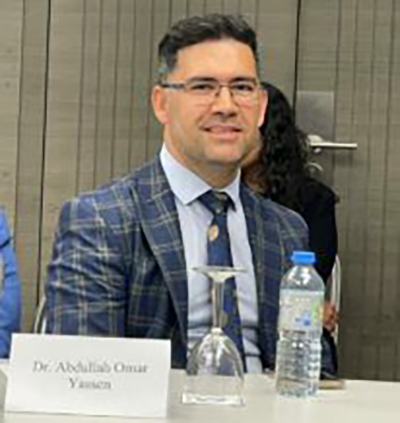
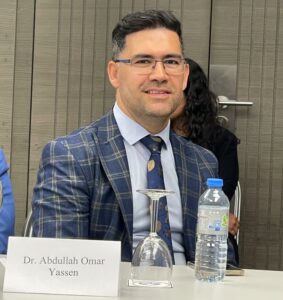
Prof. Dr. Abdullah Omar Yassen
MS University of Algeria
Dr Samir Djelti
University of Raparin
Pres. Asst. Prof. Dr. Paiman Ahmad
Yarmouk University
Assoc. Prof. Dr. Ruba Akash
Assoc. Prof. Dr. Ibrahim Darwish
THWS
Prof. Dr. Ralf Roßkopf
PhD cand. Anca Aicha
Modern University for Business & Science
Dr.Nael Alami
PhD cand. Amal Hawari
PhD cand. Aimee Ghanem
German Jordanian University
Prof. Dr. Ralf Roßkopf
Doha Institute for graduate students
Prof. Dr. Hmoud Alolimat
Erbil Polytechnic University
Dr Abdullah Omar Yassen
MS University of Algeria
Prof. Dr. Samir Djelti
University of Raparin
Pres. Asst. Prof. Dr. Paiman Ahmad
Assoc. Prof. Dr. Ibrahim Darwish
Assoc. Prof. Dr. Ruba Akash
THWS
Prof. Dr. Ralf Roßkopf
PhD cand. Anca Aicha
German Jordanian University
Prof. Dr. Ralf Roßkopf
Modern University for Business & Science
Vice Pres. Prof. Nael Alami
PhD cand. Amal Hawari
PhD cand. Aimee Ghanem
Funding
The project is funded by DAAD and the German Foreign Office for the years 2025 and 2026.